
The Davenant Institute began, like the classic meme, with someone being wrong on the internet. That someone was me.
I’d grown up in a Reformed church and household but shared with many of my generation a somewhat sophomoric disdain for Protestantism’s fractious isolation from the historic church (as I conceived it). Frustrated with evangelicals’ reflexive support for neoconservative politics, I’d increasingly dabbled in the then-fashionable “neo-Anabaptist” political theology associated with Stanley Hauerwas and his followers. And yet I still had enough common sense to know that the best way to answer my burning questions was to go back to the sources—to read the Protestant Reformers and their theory of faith and politics. I was one year into my graduate studies at the University of Edinburgh and was by this point thoroughly confused—the world of the Reformation was so much richer and yet so much more foreign than I’d imagined.
Asked by a journal to review a new book by David VanDrunen, Natural Law and the Two Kingdoms, and by my church to give a talk on Christian citizenship, I was trying to put together the scattered fragments: what does it mean to be faithful Christians and good citizens in a society where these were no longer the same thing? So naturally, I blogged about it, laboriously processing VanDrunen’s curious rendition of Reformation political thought at my personal blog, “The Sword and the Ploughshare.” Suddenly into my comment box popped one J. Peter Escalante, an international man of mystery with a seemingly encyclopedic grasp of—well, most any topic that came up.
I was well accustomed to blog arguments. I was not accustomed to losing them. Before long, though, it became clear to me that this Peter Escalante and the curious cadre surrounding him—Steven Wedgeworth, Andrew Fulford, Joseph Minich—had a much firmer grasp of the contours of Reformed political theology than I did, and I’d better stop trying to BS my way out of my ignorance and start trying to learn. I later learned that Peter and Steven had for some time been quietly carrying on an online ministry to young men like me—Protestants wavering with attractions to Rome, Orthodoxy, or “Anglo-Catholicism,” and Protestants hungry for a robustly Reformed political vision that refused both liberalism’s naked public square and theonomy’s black-clad one. But the little blog war over VanDrunen was a turning point. Steven and Peter decided to create an email list of some of their conversation partners to hash out issues and build bonds of friendship more fully. They called the group “Reformed Irenics,” and I’m told that in its earliest days much of the conversation revolved around just how wrong I was.
But, true to their irenicism, they soon invited me to join, and although I scorned the first invitation, I welcomed the second—Richard Hooker had gotten to me in the meantime. Soon I discovered in the group an intellectual home away from home, a thriving community of conversation that I had been starved for at Edinburgh. I still remember being stung when, early in my studies there, I’d asked a former graduate student if he could share with me a paper he’d written on a topic of shared interest—“Sorry,” he told me, “I’m thinking of publishing it, so I couldn’t.” Knowledge was obviously meant to be shared, but in academia, many preferred to keep it close to their chest. Knowledge was meant to be communicated out into the church and the world, but in academia, many preferred to wrap it up in jargonistic gobbledygook and publish in obscure journals to improve their job prospects. Within Reformed Irenics, I found a very different world, one in which bright young graduate students mingled freely with quirky professors and wise pastors, along with a small smattering of journalists, businessmen, and public servants, freely exchanging knowledge, refining ideas, and hashing out disagreements. There I found not only invaluable research recommendations as I pursued my doctoral work on liberty and authority in the English Reformation, but also invaluable practice in connecting and translating that work to present-day pastoral and political issues. My faith and my scholarship were deepened immeasurably by the friendships nurtured here.
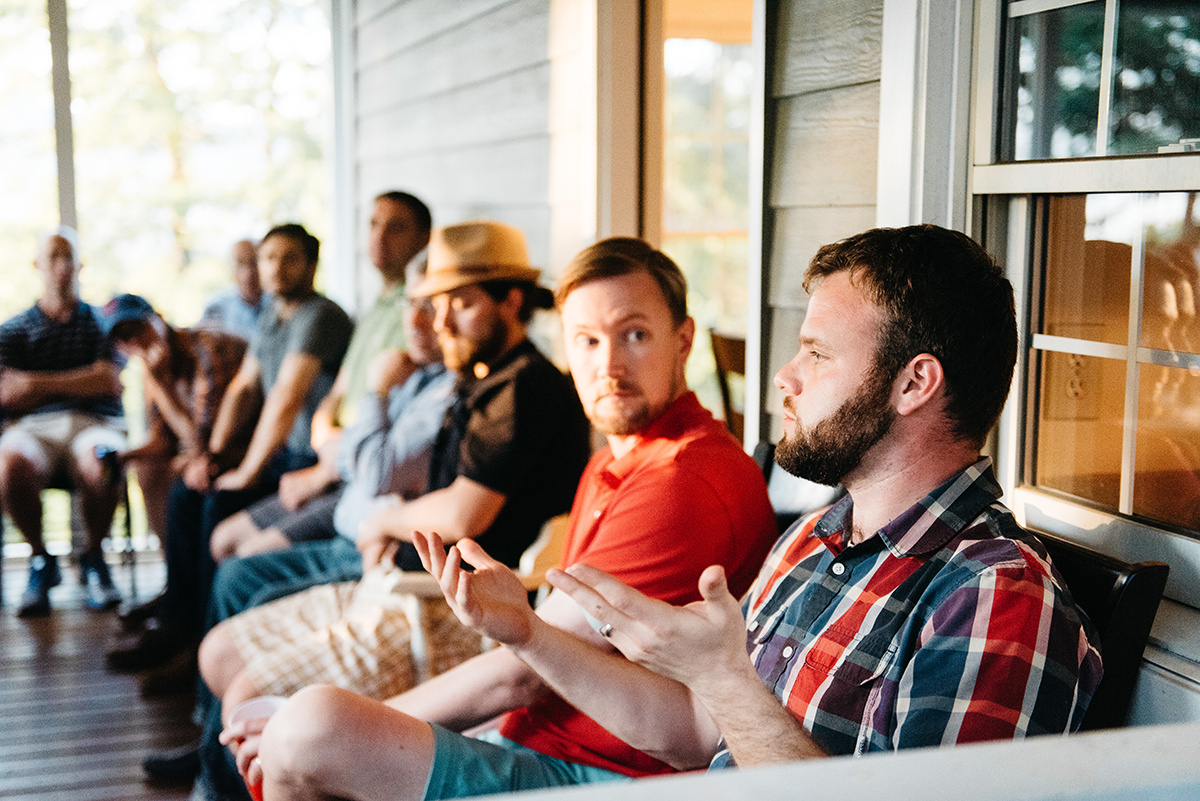
As I began to approach the end of my doctoral studies in Edinburgh and pondered my future vocation, I found myself asking, “Why did I have to get so lucky to find such a community? Why aren’t there more places for this kind of intellectual friendship, cross-pollination, and translation between church and academy?” One winter day (a grey and windy day, no doubt, as most were) as I was walking through Holyrood Park under the brooding shadow of Arthur’s Seat, the idea just came to me: why not create an institution that could sustain and expand the organic community of “Reformed Irenics”? And why not start by inviting its members to meet for the first time in person? That day, the Davenant Institute was born in my imagination.
Read the full article at Ad Fontes

The Davenant Institute is only able to do the work it takes to renew Christian learning, restore Protestant wisdom, and contend for the common good thanks to supporters like you.
In recognition of our ten-year milestone, would you consider, would you consider donating $10 or more to support our continued work? Every dollar goes to supporting our community of scholars, students, and friends pursue truth and defend the Gospel together.
Please give today to sustain and expand this essential work of equipping the next generation of Christian leaders, and become part of our growing army of friends!