By David A. Larson
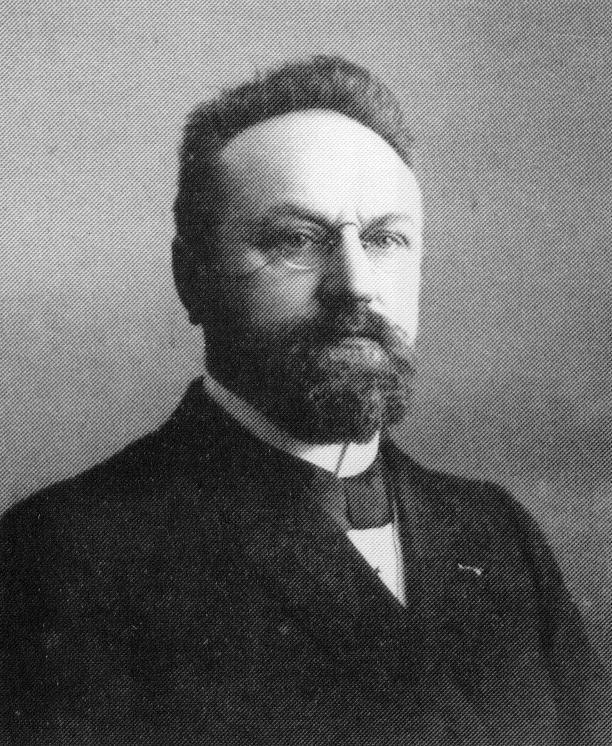
For many, consistent prayer is very difficult. Yet prayer should never be a stranger to the saint, for it holds a critical place in the Christian life. In his Reformed Ethics, Herman Bavinck calls prayer “a duty and the most important good work.”[1] At first blush, one might not be surprised to hear that prayer is a duty. “Prayer is,” after all, “regularly repeated [as] divine commands in the Old and New Testaments.”[2] The Dutch theologian emphasizes, however, that prayer is more than a matter of obedience: “Prayer is much more a privilege than it is a duty … It is a right given by God to man … Prayer is not a command but a promise, blessing, benefit.”[3] By indicating that prayer is more than a command and that it involves right, promise, blessing, and benefit, Bavinck nudges the novice towards seeing prayer as built upon and expressing the order of being. Bavinck makes a robust Creator-creature distinction foundational to understanding prayer, showing it to be an expressly creaturely activity.
“Bavinck nudges the novice towards seeing prayer as built upon and expressing the order of being.”
A Fundamental Distinction between Creator and Creature
Prayer, according to Bavinck, is suitable for humans because we are creatures and God is God. In his own words,
Prayer is fitting for us because God is God, because of all his attributes: faithfulness, grace, omnipotence, goodness, and so on. Furthermore, we also depend on him for everything; having nothing from ourselves we need to receive everything from him. Prayer is therefore deeply grounded in human nature; it is a necessity for its being and exists among all peoples and human beings, even those who curse.[4]
Bound up in his understanding of prayer, Bavinck utilizes the Creator-creature distinction to formulate the foundation and form of prayer. Notice above that he constructs prayer upon the crucial confession that God is God; thus, creatures “depend on him for everything.” In other words, creatures depend on the God who does not depend on anything.[5] Since creatures receive everything from God, including their very being, creatures exist only in a relation of reception. Unlike God, who is “defined by nothing other than his own essence,”[6] we are defined by our relation to Him: “Never and nowhere are we independent of God but always dependent on the highest power.”[7] Prayer—asking that God would give us our daily bread, keep us from evil, and so forth—is simply an aspect of being a creature. Prayer presupposes the classical distinction between Creator and creature—it is not just something we are commanded to do, but it is an enactment of our very nature as human creatures.
After overviewing the biblical terminology of prayer,[8] Bavinck describes prayer thusly: “prayer consists of people who know and sense their dependence upon the true God … and [call] on him for help … or [give] thanks for received benefits.”[9] At first glance, one does not need to press much deeper to see how prayer correlates with creaturely being. Prayer acknowledges creaturely limits. Prayer is natural to creaturely being because creaturely being simply is a relation of dependence, and prayer is the conscious confession and calling out to the Creator in recognized dependence.
Prayer’s Subject: Creatures
According to Bavinck, the subject of prayer is creatures, specifically human creatures.[10] “Prayer is an act of our consciousness,” Bavinck tells us, “lifting up our spirit or mind to God.”[11] In this act, both believer and unbeliever display the Creator-creature distinction when they pray, for both express and feel their inadequacy. They must look to Another. However, Bavinck distinguishes the prayer of the wicked and the prayer of the saint: “the subjects of true prayer are regenerated people,” for they have the Spirit.[12] The indwelt saint actually manifests real human creatureliness when she prays, because “even the Christian does not know how to pray properly (Rom. 8:26), neither what to pray or how, because of weakness and lack. Therefore the ‘Spirit himself intercedes for us with groaning too deep for words.’”[13] That is, when Christians pray, they do so by the Spirit; the very act that manifests our creatureliness is achieved only in relation to the Spirit’s enabling presence.
“When Christians pray, they do so by the Spirit; the very act that manifests our creatureliness is achieved only in relation to the Spirit’s enabling presence.”
Notice that (1) prayer expresses the human essence and (2) Christians truly and more fully enact this expression. Christians, then, are more creaturely than their unbelieving kin, because unbelievers’ acts minimize and reverse the Creator-creature distinction.[14]
Prayer’s Object: God, Creation’s Fontal Source
After quoting a litany of texts, Bavinck straightforwardly notes the object of prayer: “the true God … the Triune God, Father, Son, and Holy Spirit, is the proper object of our prayer.”[15] While one may not find as an explicit doctrine of God’s perfection in Reformed Ethics as in the Reformed Dogmatics, Bavinck does initiate his Ethics by confessing God as creation’s source, which implies his pure actuality intelligible from his causal power: “by faith, we understand that human beings are created in the image of God and are God’s offspring (Acts 17:28).”[16] That God is the one from whom all things exist, for Bavinck, presupposes that he exists fully in and of himself in self-fulfilled bliss as the ground of all economic actions.[17]
Because God is this one, the giver of all good things (Jas 1:17), the psalmist confesses, “The Lord upholds all who are falling and raises up all who are bowed down. The eyes of all look to you, and you give them their food in due season. You open your hand; you satisfy the desire of every living thing” (Ps 145:14–16). It is therefore folly for creatures to look to any other fountain for lasting satisfaction.
Conclusion: Prayer as Confessing God and Becoming Human
The Creator-creature
distinction is integral to Bavinck’s account of prayer. In Bavinck’s eyes,
prayer is fundamentally a human or creaturely activity upholding the confession
that God is God and that it enacts human creatureliness. Prayer makes humans
more human. This is a significant peculiarity in Bavinck’s theology, as John
Bolt points out: for Bavinck, “We are Christian to be human.”[18]
Since we are still on the way to perfection, we are still becoming human. Part
of what it means to be human is to honor God as God and to not place ourselves on
His level. “Those who are born of God increasingly become the children
of God and bear his image and likeness, because in principle they already are
his children. The rule of organic life applies to them: Become what you are!”[19]
If we desire to worship and serve God only (Deut 6:13; Matt 4:10) such that we
have no other gods, Bavinck believes we would do well to pursue and enact our
humanity by praying to our Creator in absolute dependence, expecting to find
true blessedness in Him. Be what you are by calling upon the Lord.
David A. Larson is a ThM student at Bethlehem College & Seminary, specializing in divine simplicity and divine freedom in the theology of Thomas Aquinas.
[1] Herman Bavinck, Reformed Ethics, vol. 1, Created, Fallen, and Converted Humanity, ed. John Bolt (Grand Rapids: Baker Academic, 2019), 467. Emphasis original.
[2] Bavinck, Reformed Ethics, 467. Bavinck points to us to these examples: Ps 50:15; Matt 7:7; Rom 12:12; Eph 6:18; Phil 4:6; Col 4:2; 1 Thess 5:17 (Bavinck, Reformed Ethics, 467n33).
[3] Bavinck, Reformed Ethics, 468.
[4] Bavinck, Reformed Ethics, 467.
[5] Hence the distinction between ipsum esse subsistens and ens per participationem (cf. Herman Bavinck, Reformed Dogmatics, ed. John Bolt, trans. John Vriend, 4 vols. (Grand Rapids: Baker Academic, 2003–2008), 2:419).
[6] Bavinck, Reformed Dogmatics, 2:418.
[7] Bavinck, Reformed Ethics, 50.
[8] Bavinck, Reformed Ethics, 468–472.
[9] Bavinck, Reformed Ethics, 472. Emphasis original.
[10] Bavinck, Reformed Ethics, 472–473; cf. 36, 50.
[11] Bavinck, Reformed Ethics, 473.
[12] Bavinck, Reformed Ethics, 473.
[13] Bavinck, Reformed Ethics, 473. Emphasis original.
[14] Bavinck, Reformed Ethics, 98.
[15] Bavinck, Reformed Ethics, 476.
[16] Bavinck, Reformed Ethics, 35; cf. Bavinck, Reformed Dogmatics, 2:418–419.
[17] E.g., see Bavinck, Reformed Dogmatics, 2:251, 420.
[18] John Bolt, Bavinck on the Christian Life: Following Jesus in Faithful Service (Wheaton, IL: Crossway, 2015), 41.
[19] Herman Bavinck, Reformed Dogmatics, 4:255. Emphasis original.