Davenant Bookstore
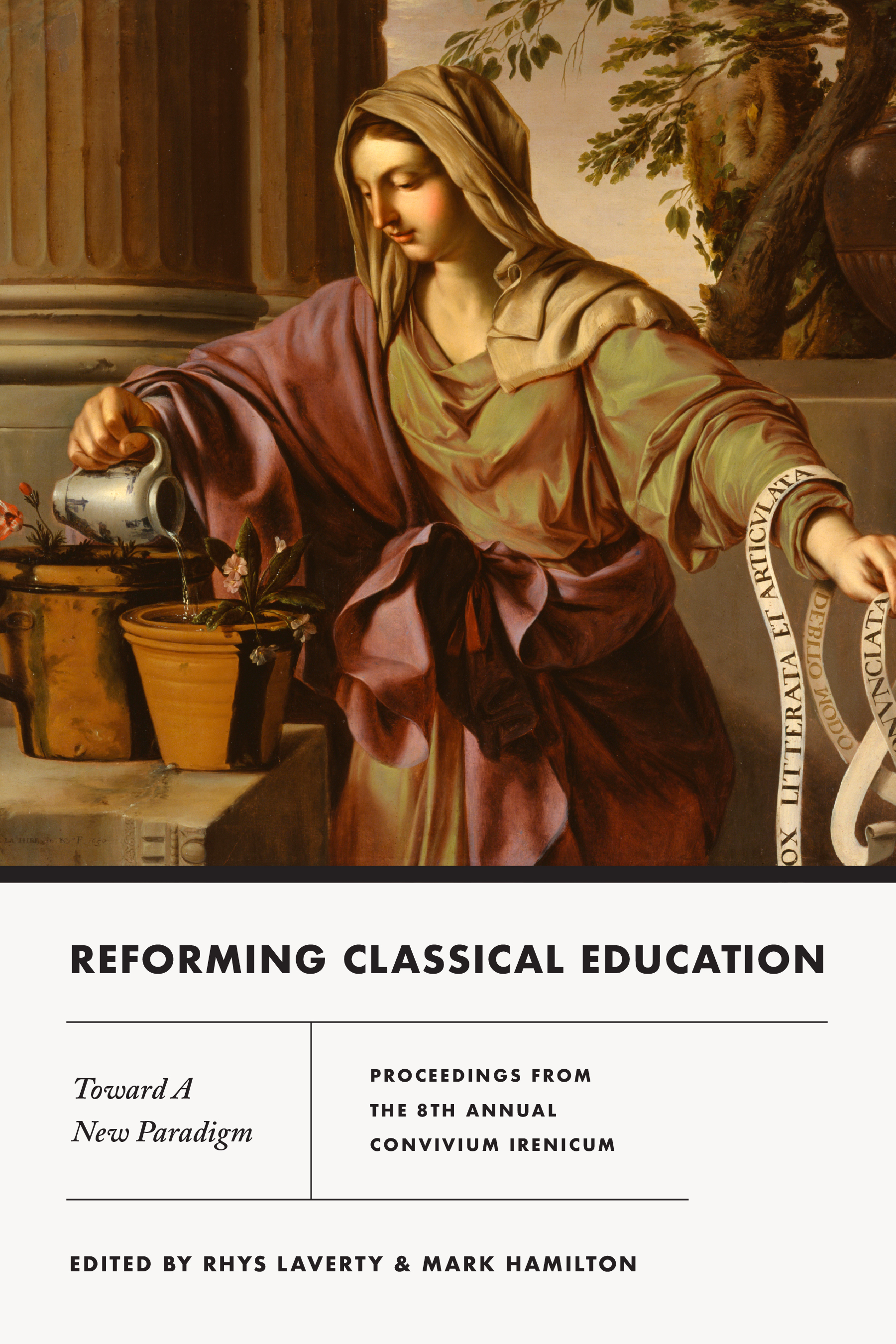
Reforming Classical Education
Toward A New Paradigm
We are now in the third generation of the great educational awakening often called the “classical Christian education movement.” As with all successful movements, rival visions for its future direction have emerged, and fundamental questions beg for answers. Many hail classical education as a panacea for the intellectual and moral degradation of modernity. Others champion it above contemporary education by arguing that it ultimately produces greater career success. Others promise it will create profound thinkers by exposing children to great literature. But will reading Plato really train a Christian child in virtue? Will learning Latin ready them for success in any field–and is that even something for which we should ready them? And literature is well and good, but why doesn’t classical education seem to say much about the sciences?
The essays in this volume address these questions and more, exploring the issue of what a distinctly Protestant form of classical education may look like today. Christian educational renewal undoubtedly involves bringing out treasures old–and there remain some which are still neglected. Yet renewal must also be open to treasures new, as we creatively respond to the challenges and circumstances of our time.
Publication Details
- Publisher: Davenant Press
- ISBN: 978-1-949716-12-2
- Pages: 176
- Editors: Rhys Laverty & Mark Hamilton
Endorsements
-
“When one gets serious about the need for Classical Education, it is easy to feel like King Josiah, who, when doing renovations on the Temple finds the forgotten Book of the Law. The realization of how much had been lost must have been overwhelming. But when the sadness and shame passed the work of reinstating God’s law began. So too for us. We live in the aftermath of having outsourced the formation of souls to a modern materialistic pedagogy that regards Man as little more than meat with hormones. When that initial sadness and shame of what we’ve lost passes, we get down to work rebuilding real education. Reforming Classical Education is true to that calling.”
— Graeme Donaldson, Veritas Academy, Austin TX; co-host of the Classical Stuff You Should Know podcast
-
“Reforming Classical Education is the first of its kind, as trite as that may sound. The authors take the reader on a journey by sampling a variety of issues that concern the Christian framework (both as a worldview and a practice), generally, with a Reformed slant for a well-rounded classical education. The essays are worthy of serious reflection as we continue to mold the hearts and minds of young men and women to enter a world equipped with the tools of Christian knowledge and classical antiquity. While the classical education movement is still young, the present collection will aid in further retrieval of wisdom from the Protestant sages of the past toward a renewed and faithful classical environment in the classroom.”
— Joshua R. Farris, Humboldt Experienced Research Fellow, University of Bochum
-
“Reforming Classical Education is a thoughtful contribution to the classical education movement that deftly makes history, as Frederick Douglass said, “useful to the present and to the future.” Through wise application of Scripture, philosophy, and historical exemplars, these nine writers chart a path forward for classical education that is oriented toward honoring God by raising up boys and girls into virtuous men and women. I particularly appreciated the focus on mathematics and the quadrivium, including its restoration to equal importance with the trivium in the education of students.”
— Thomas Magbee, Co-host of the Classical Stuff You Should Know podcast
-
“ The classical education movement stands under authority. Although Protestants certainly maintain their final allegiance to Scripture, to be classical also presupposes submission to a tradition. [ Reforming Classical Education ] offers insight into the Protestant tradition of education in hopes of offering several correctives to the movement. They approach each subject with their usual emphasis on historical resourcement while remaining thoroughly Protestant.”
— Front Porch Republic