Davenant Bookstore
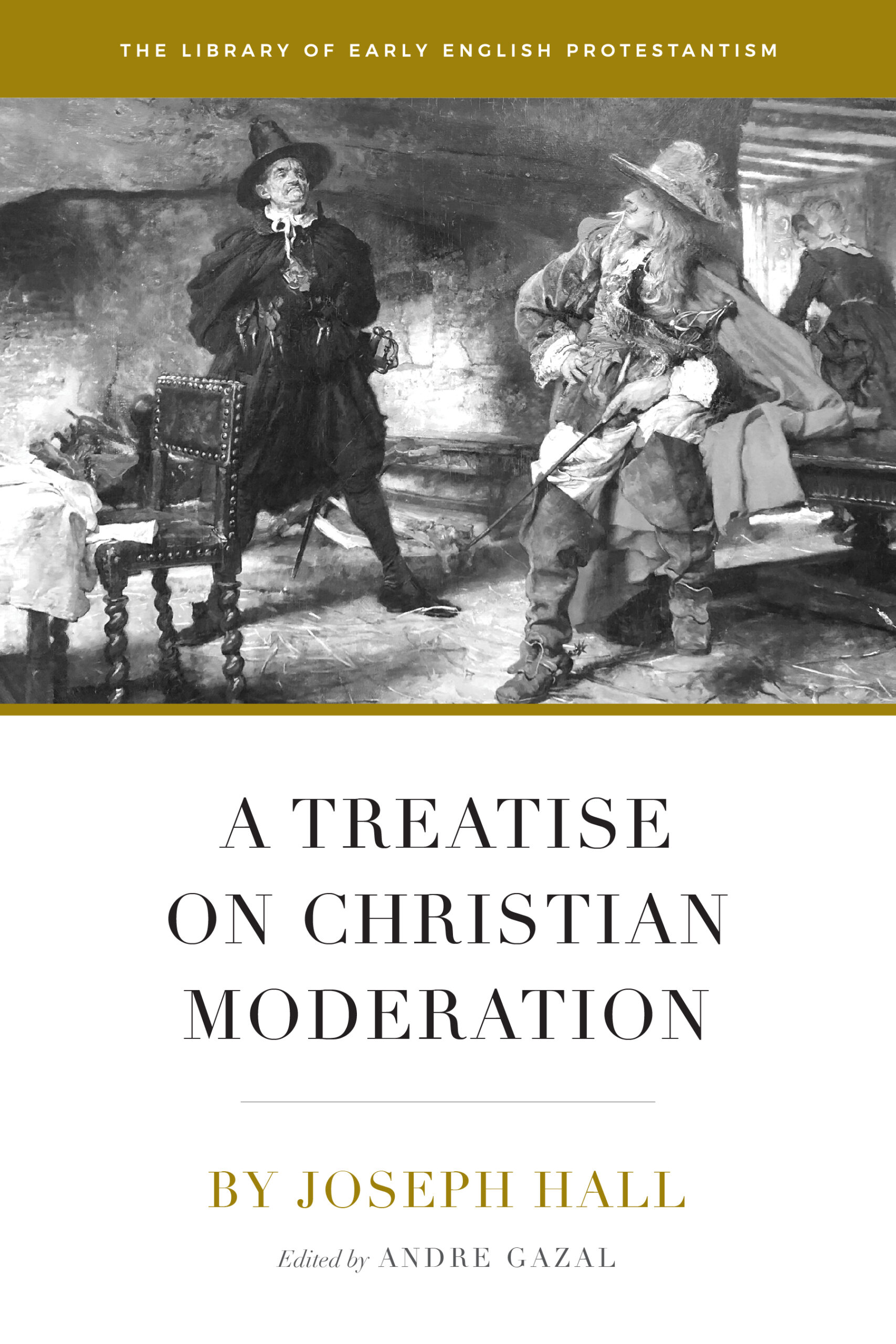
A Treatise on Christian Moderation
An Age of Division.
Political and religious convictions, strongly held, are tearing families, communities, and slowly the whole country apart. The men with the most extreme personalities seem to rise to the top, while those urging moderation are mocked and sidelined.
This may sound like the present day–but it refers to England in the run-up to the Civil War in 1642. As the nation rolled towards a conflict which would claim tens of thousands of lives, Bishop Joseph Hall (1574-1656) called on his countrymen to exercise an unglamorous yet vital Christian virtue: moderation. Hall, one of the English representatives at the Council of Dort, was branded “our English Seneca” for his intellectual abilities. These abilities are on full display in this work as he musters Scripture, philosophy, and history into a comprehensive commendation of the virtue of moderation.
In this new edition of A Treatise on Christian Moderation, with extensive footnotes and a scholarly introduction, readers can rediscover a forgotten treasure of Protestant wisdom. Hall’s call for personal and public moderation was tragically ignored in his time. In our own increasingly immoderate age, may this work finally find the hearing it deserves.
Publication Details
- Publisher: Davenant Press
- ISBN: 978-1-949716-24-5
- Publication Date: February 22, 2024
- Pages: 207
- Author: Joseph Hall
Endorsements
-
“Joseph Hall is one of the most humane, appealing and–yes–moderate Protestant voices to emerge from the maelstrom of seventeenth-century England. I hope this careful new edition helps him to find the modern readers he deserves.
— Alec Ryrie, Professor of the History of Christianity, University of Durham
-
“Andre Gazal’s fine new edition of Joseph Hall’s (1574—1656) Treatise on Christian Moderation offers a timely contribution to English ecclesiastical historiography. Hall, sometime Bishop of Exeter, was described by Thomas Fuller as the “English Seneca”, a neo-Stoical moralist who observed a contentious, divided, and bloodstained Christendom in the midst of the English Civil War and the Thirty-Years’ War who sought healing through an irenical, catholick message of moderation. Gazal’s lucid introduction provides a splendid and concise overview of English political and religious history of the early seventeenth century, and a discerning brief biography of this great English moralist. Gazal has based his new edition of the Treatise on the first edition of 1639 with spelling and syntax modernized. This new edition has helpful explanatory footnotes, and translation of Latin texts. The edition is timely in the context of the current contentious division and prevailing intolerance of the so-called ‘culture wars’. Who knows? Perhaps a dose of neo-Stoicism may provide a salutary prescription for our own time.”
— Torrance Kirby, Professor of Ecclesiastical History, McGill Unviersity