Davenant Bookstore
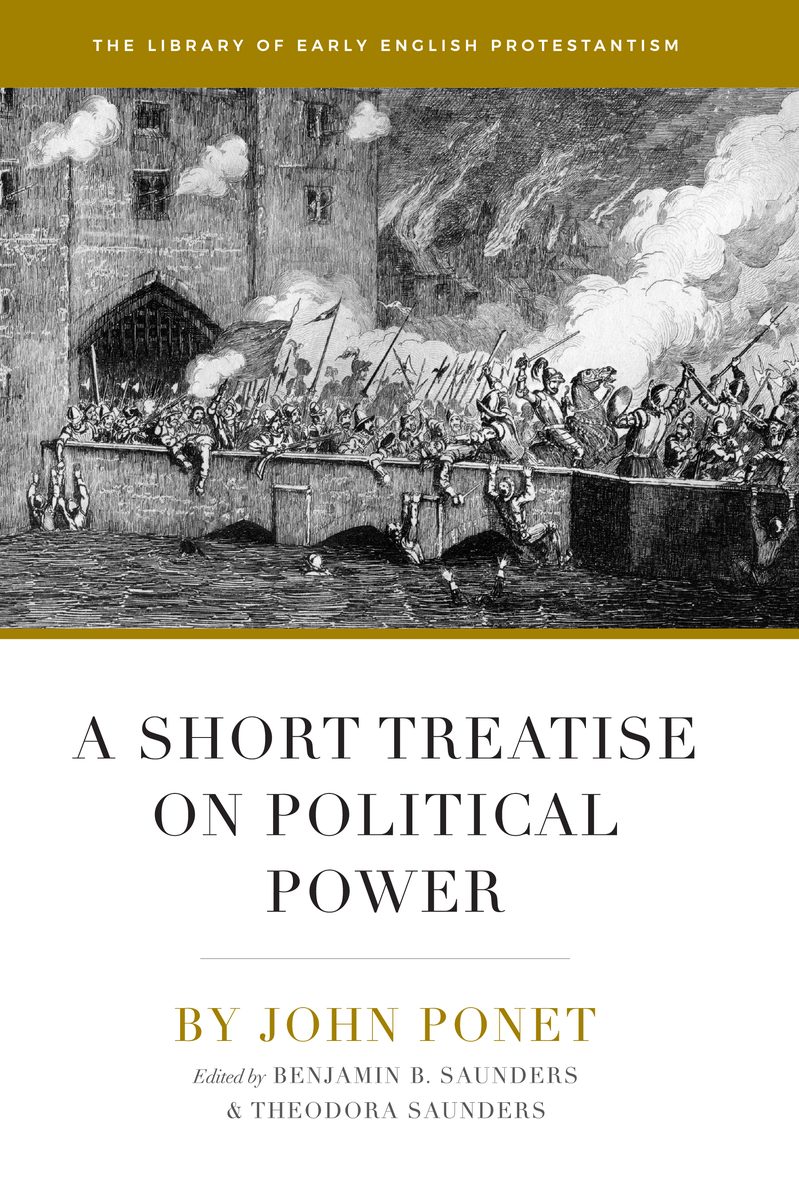
A Short Treatise on Political Power
When rulers became tyrants, resistance became divine obligation.
There is a vital need to recover an approach to civil power which is grounded in natural law and Reformation political thought. There is a rich history of reflection within the Protestant tradition about the role of civil government, natural law and resistance to unjust rulers, and this has the potential to provide valuable guidance to Christians and the church today. John Ponet’s Short Treatise of Politike Power (1556) is one such text, an important work about the nature and limits of the role of civil government written during a turbulent period in English history. However, it is not widely available and there is no complete modern edition, until now.
Publication Details
- Publisher: Davenant Press
- ISBN: 978-1-949716-68-9
- Publication Date: July 24, 2025
- Pages: 273
- Author: John Ponet
Endorsements
-
“This is a well-introduced and well-edited modern edition of an important but forgotten political tract of John Ponet. Summoning an array of classical, biblical, patristic, Catholic and Protestant sources, Ponet outlined a provocative theory of natural law, constitutional democracy, and limited government that would become axiomatic for Protestant political thought. More powerfully, he set out a theory of rights, resistance, and revolution against political tyranny that helped to drive the early modern democratic revolutions on both sides of the Atlantic. In a day of growing political authoritarianism around the world, Ponet’s insights remain strikingly propitious.”
— John Witte, Jr., Faculty Director, Center for the Study of Law and Religion, Emory University
-
US President John Adams once wrote that all the essential principles of liberty which were afterwards dilated upon by Sidney and Locke were first to be found in the political theology of John Ponet (1516-1556). That an English bishop should influence independence from England is not only ironic and intriguing, but indicative of the importance of this revolutionary treatise, both then and now. John Ponet was a central figure on Archbishop Cranmer’s bench of English Reformation bishops, and his importance is currently receiving a well overdue scholarly retrieval. In terms of political thought, his Short Treatise on Political Power offers a rich banquet of ideas which should stimulate reformation research and which may also resource some contemporary challenges facing reformed political theology and practice. Thus, Ben and Theodora Saunders are to be heartily commended for providing us with, not only an informative introduction to the former Bishop of Winchester, but most of all, an excellent modernisation of Ponet’s political powderkeg of a publication.
— Mark Earngey, Head of Church History and Lecturer in Christian Thought, Moore Theological College, Sydney