Davenant Bookstore
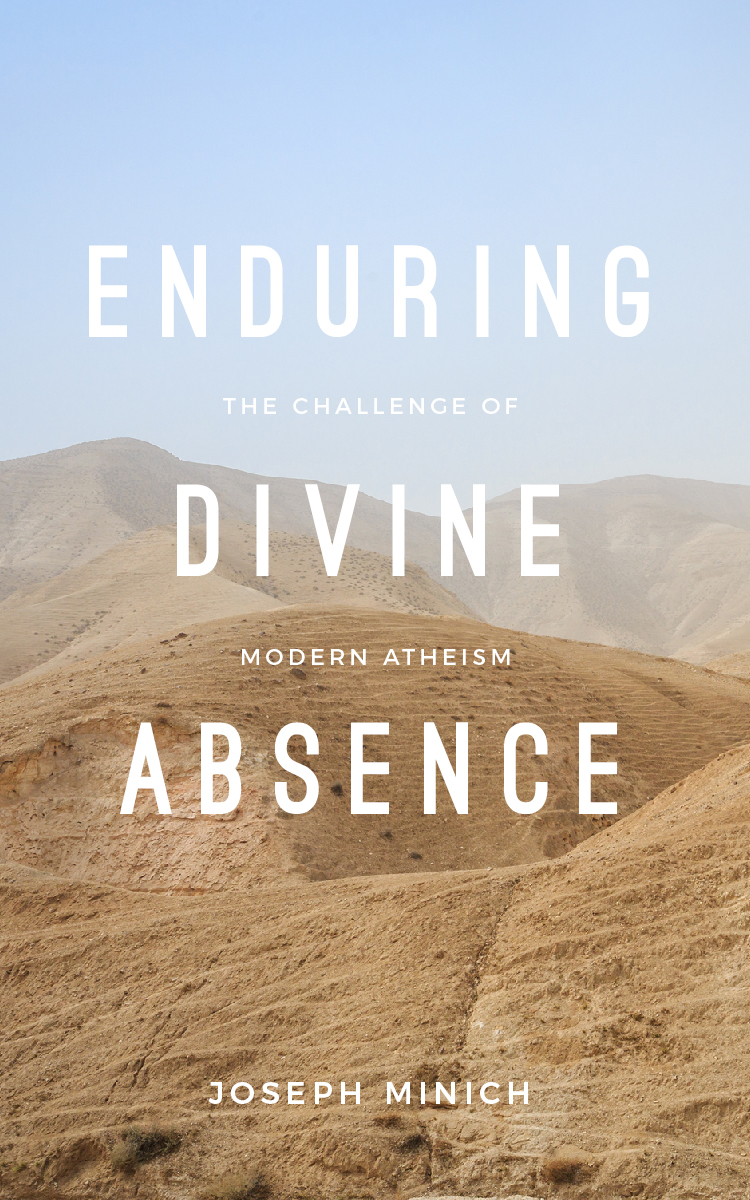
Enduring Divine Absence
Today, millions of people in the modern West identify as atheists.
And even for believers, the intellectual and spiritual temptations to deny the existence of God seem greater than ever. Too often we respond to this pressure by seeking more and more rational proofs of God’s existence, but what if a lack of reason to believe is not our main problem? In this volume, Joseph Minich argues that our real challenge is existential and imaginative—a felt absence of God that is more visceral in our modern world than for most generations past, and the sense that if God cannot be sensed, He cannot be there. Why are we so haunted and disoriented today by this sense of God’s absence? And how can we learn to sustain and strengthen our faith in the face of it? In these pages, Minich charts a way back to a renewal of our hearts and imaginations that can enable us to embrace the challenge of finding and being found by the hidden God.
Publication Details
- Publisher: Davenant Press
- ISBN: 978-0999552780
- Publication Date: June 12, 2018
- Pages: 112
- Author: Joseph Minich
Endorsements
-
“Most people today become atheists less because of persuasive arguments than because of the social realities of our secular age. There are plenty of good apologetics books out there. But few target the ‘gut’—that is, the pre-understandings and social practices that make belief in God more difficult today than in previous generations. This is a must-read.”
— Dr. Michael Horton, Professor of Systematic Theology and Apologetics, Westminster Seminary California
-
“The problem of God’s hiddenness is not new. The Psalmist questioned, “Why, O LORD, do you stand far away?” Isaiah exclaimed in wonder, “Truly, you are a God who hides himself!” And yet, in the modern period—our secular age—a pervasive sense of God’s absence presses in on the Late Modern self with peculiar force. Even believers of deep faith, with a grasp on the rational reasons for belief in God, still feel the force of his absence. they too can be caught in the imaginative appeal of living bravely in a world without God. In this elegant little work, Joseph Minich explores a bit of the history and a uniquely perceptive account of the existential reality of how and why that is the case. More importantly, for all who would learn to faithfully endure nevertheless, he wisely points us to the God Who Is and who is for us in the Cross. I highly recommend this work.”
— Derek Rishwamy, Trinity Evangelical Divinity School and Contributor to “Our Secular Age”
-
“Joseph Minich’s Enduring Divine Absence is a marvelous essay that deals with the underappreciated temptation or psychological pull of atheism, the feeling that atheism is still somehow plausible even for believers who are aware of atheism’s intellectual problems. Minich thoughtfully analyzes this temptation, beginning with accurately and sympathetically explaining what it actually feels like (and I would know). He then gives insightful suggestions on some of its main causes, and ends by helpfully offering practical advice for those who feel it (who are more numerous than most of us realize). Again, Minich clearly understands those who are tempted in this way, gently assuring them that it is an entirely understandable feeling, but without going so far as to make doubt a positive, Promethean virtue that’s necessary for “the journey of faith.” I recommend this book to those who have nagging doubts about God’s existence or have been surprised by the sting of an objection to Christianity. I greatly benefited from it.”
— Mitch Stokes, Senior Fellow of Philosophy, New Saint Andrews College