
-
|
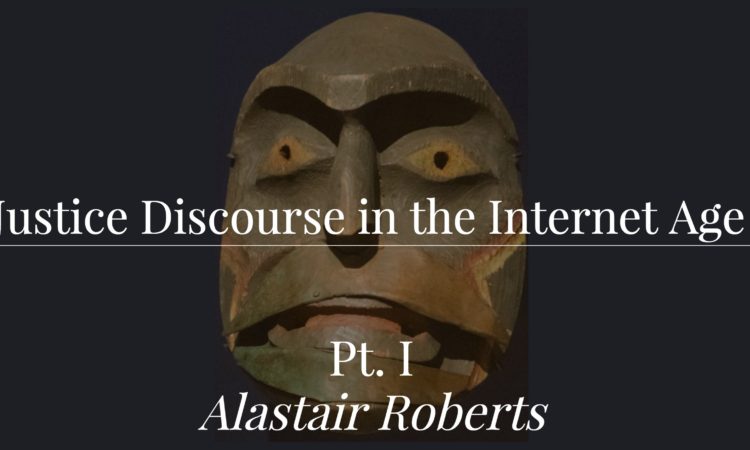
Justice Discourse in the Internet Age, Pt. I: Introduction
Writing almost two decades ago, René Girard—who devoted most of his life to exploring the issues of social contagion, scapegoating, victims, and the cults that surround them—warned against the rise of what he termed a ‘victimology’ movement.
-

|
Justice Discourse in the Internet Age, Pt. II
In my introductory article to this series, I argued that, in the socially saturated context of online media, social justice discourse frequently functions as a means of fashioning and maintaining our public image.
-

|
Justice Discourse in the Internet Age, Pt. III
In Amusing Ourselves to Death: Public Discourse in the Age of Show Business, Neil Postman quotes a passage from Henry David Thoreau’s Walden: We are in great haste to construct a magnetic telegraph from Maine to Texas; but Maine and Texas, it may be, have nothing important to communicate…we are eager to tunnel under the…
-

|
Inhabiting the Places of Promise: Martin Luther’s Teaching on the Three Institutions
Reflection on the institutions, on the shape of the divine promises to care for human life as revealed in Scripture, brings to light that to which our hearts cling in social and political life.
-

|
The Christian Right (and Wrong)
Harp’s narrative provides useful history, but a more charitable and accurate assessment is needed to develop a contemporary Protestant political theology
AD FONTES