
-
|
Davenant Latin Institute Hires Aaron Denlinger
We are pleased to announce that, beginning this Spring Semester, Aaron Denlinger will be joining the faculty of our Davenant Latin Institute. Dr. Denlinger is Professor of Church History and Historical Theology at Reformation Bible College, and Research Fellow for the Puritan Studies Program of the University of the Free State. He is the author
-
|
Registration for all DLI Courses Now Open!
We are excited to announce that we now have our course registration system in place and are ready to process registrations for all Davenant Latin Institute courses for the coming year! To register, just go to the appropriate category page and select your desired course:
-
|
Davenant Latin Institute Partners with BibleMesh and New Saint Andrews
After a successful first year of the Davenant Latin Institute, we are pleased to announce today new plans to expand the program’s reach. We are partnering with BibleMesh and New Saint Andrews College to further our goal of providing accessible, affordable online Latin education for anyone interested in learning Latin. The first module NSA’s BibleMesh
-
|
Deadlines Approaching for Summer Latin Course Enrollment
With the 2015-16 academic year coming to a close, the Davenant Latin Institute is gearing up for our summer intensive Introduction to Theological Latin courses which will begin in June. These are designed with the needs of busy seminarians, graduate students, and teachers in mind, offering a chance to rapidly build your language skills during the
-
|
Davenant Latin Institute Partners with Gordon Conwell
The Davenant Latin Institute is gearing up for another great year of enriching the church and academy by equipping students, teachers, pastors, and scholars to read the language of our Christian past. We are also excited to announce that we have just established a partnership with Gordon-Conwell Theological Seminary to recognize all our courses for
-
|
Davenant Latin Institute Summer and Fall Course Registration Now Open!
The Davenant Latin Institute, now entering its third year, is pleased to offer our fullest lineup yet of courses in theological Latin for all levels of ability. Our courses are structured to fit the busy schedules of seminarians, pastors, graduate students, and teachers, and are recognized for academic credit by institutions such as Gordon-Conwell Theological Seminary,
-
|
Davenant Latin Institute Promotional Video
The Davenant Latin Institute is a unique program of online courses to equip you to read theological Latin texts. Courses are affordable, flexible, and available for all levels of ability. Follow us on YouTube and see other Davenant Videos!
-
|
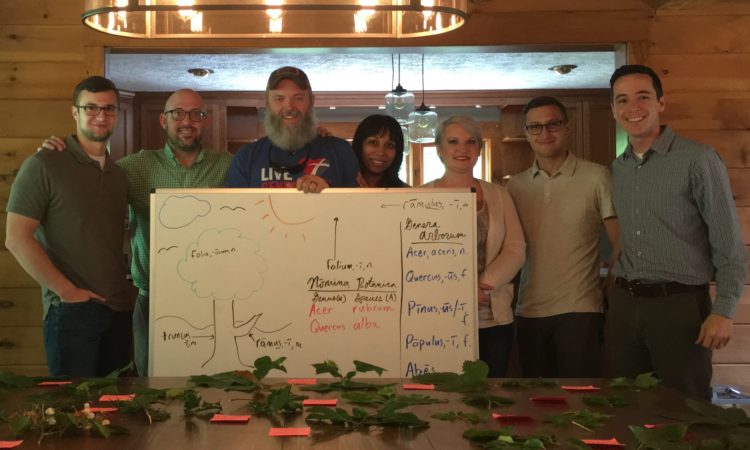
A Latin Crash Course at Davenant House
This report was written by William Hugh Scott, a Master’s student at Gordon-Conwell Theological Seminary, who attended this year’s DLI Summer Residential Course. On May 22 The Davenant Trust opened the doors of the Laureldale Cabin to host the inaugural offering of “Residential Intensive Introduction to Theological Latin.” This was a one week intensive that
-

|
The Unique Benefits of Learning Latin
Until recently, Latin was a staple of any Western curriculum. From medieval times to America’s founding, no education was considered complete without it. Instruction usually began at a young age; by graduation, students could recite Virgil or Cicero with ease. It was not until the education reforms of the 1960s that it was all but…
-
|
The Busy Student’s Method for Learning Latin
It seems to be a rule that those who want to learn Latin are always very busy. I’ve taught fellow graduate students who have had to cram Latin homework between full-time studies, part-time work, and family meals. I’ve taught middle schoolers for whom Latin lessons vied for attention with sports, music, and math worksheets. I’ve…
AD FONTES